Stair-Step Foundation Cracks: Normal or a Real Problem?
Worried about stair-step foundation cracks in Minnesota’s clay soil? Learn what’s normal movement, what’s serious, and how grading and drainage can protect your home.
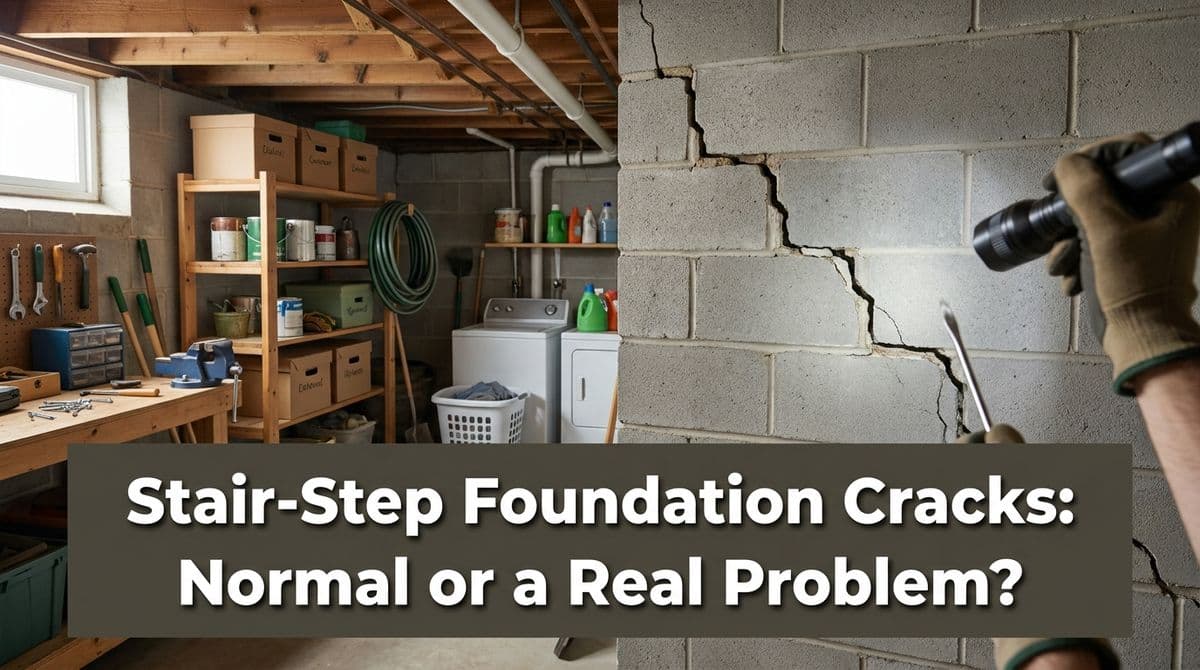
Stair-Step Foundation Cracks in Clay Soil: What We Tell Minnesota Homeowners
We recently got a call from a homeowner — let’s call him David — who was worried about stair-step cracks on the exterior of his Minnesota home’s foundation. The house is just over 20 years old, and a previous owner had already patched one corner. In the eight years David’s lived there, he’s noticed more stair-step cracking in the block foundation.
He told us a structural engineer had been out and said everything was “normal movement” and structurally sound… but David’s question was the same one we hear all the time: “If it’s ‘normal,’ why is it still moving, and how do I know when it’s a real problem?”
We completely understand that concern. Minnesota clay soils, freeze-thaw cycles, and moisture changes can all make a perfectly good foundation look scary. So we walked David through how we look at stair-step cracks and what really matters for long-term stability.
Why Clay Soil Makes Minnesota Foundations Move
We always start by talking about the ground the house is sitting on. Around much of Minnesota, especially in suburbs and small towns, we’re dealing with expansive clay soils. That clay swells when it’s wet, shrinks and hardens when it’s dry, and repeats that cycle year after year.
That movement pushes and pulls on your foundation. Even a 20–25-year-old home like David’s can keep shifting a bit if the soil and drainage around it aren’t ideal. So yes, sometimes a little movement is normal here — but we don’t guess. We look for specific signs.
Typical “Normal” Movement in Clay
When we walk a property, here’s what usually falls into the “normal for Minnesota” category:
- Hairline stair-step cracks in block or brick that are thin and consistent
- Minor seasonal widening and closing of those cracks
- No matching interior damage (no big drywall cracks, doors still working fine)
- Gutters and grading that clearly let water pool near the foundation
That last one matters a lot. With David, we immediately talked about regrading because his soil and slope were likely feeding the problem. Even if the foundation is currently sound, keeping water away from the walls helps prevent “normal” movement from turning into “serious” movement.
What Stair-Step Cracks Actually Mean
Stair-step cracks show up along the mortar joints of block or brick foundations, creating that “zig-zag” pattern. They’re usually a sign the foundation is responding to movement in the soil — but that can range from harmless to urgent.
With David’s home, a previous owner had already filled one corner, and new cracks formed nearby. That’s a clue we often see: patching the surface without addressing the underlying cause. Mortar or caulk can hide a crack, but it won’t stop soil from shifting.
When Stair-Step Cracks Point to a Bigger Problem
We walked David through a simple rule of thumb we use on almost every site visit. If you’re seeing stair-step cracks and:
- The crack is wider than a nickel at any point
- It has noticeably widened over a couple of seasons
- Blocks are staggered or offset, not in the same plane
- You also see interior signs: doors sticking, sloping floors, diagonal drywall cracks above windows or doors
…then we start treating it as more than just “cosmetic.” That doesn’t mean your house is unsafe, but it does mean we want to get in front of it with a proper plan.
When It’s Usually Just Normal Movement
On the other hand, we’re often out at homes where the cracks are:
- Hairline and fairly uniform
- Not growing beyond a tiny amount season-to-season
- Not paired with any interior symptoms
That matched what David’s engineer had told him — structurally sound, but still worth monitoring and improving drainage. In cases like that, our conversation shifts from “emergency repair” to “maintenance and prevention.”
Clay Soil + Poor Drainage: The Real Villain
We often say that water is the boss of your foundation. With heavy Minnesota clays, moisture control is everything. During our call, David mentioned regrading along with crack repair, and we told him he was thinking in exactly the right direction.
Simple Checks You Can Do Outside
Here are the same things we asked David to look at before we came out:
- Gutters and downspouts: Are they clean? Do downspouts discharge at least 6 feet from the house?
- Ground slope: Does the soil slope away from the foundation at least 6 feet out, or does it settle back toward the wall?
- Mulch and landscaping: Are beds built up above foundation level, trapping water against the wall?
Fixing these issues typically costs far less than structural work, and in many cases, it’s the best first step — especially when an engineer has already said the structure is sound, like with David.
When to Call in a Pro (and Who to Call First)
We always encourage homeowners to start with an engineer when cracks are concerning or confusing. David had already done that, which gave us a solid baseline: the home was structurally sound, but ongoing movement and water management needed attention.
From there, our role is to:
- Evaluate the cracks on-site and compare them to the engineer’s notes
- Recommend tuckpointing or patching where appropriate
- Adjust grading or suggest drainage improvements to stabilize the soil
- Set up a simple monitoring plan (photos, measurements) so you know if things change
That’s exactly what we lined up for David: a visit on one of the days he was home, a clear scope of work on the exterior cracks, and a grading plan to help calm that clay soil down.
Our Best Advice if You’re Seeing Stair-Step Cracks
If you live in Minnesota and have noticed stair-step foundation cracks, here’s how we suggest approaching it:
- Don’t panic. Clay soil + freeze-thaw makes some movement common here.
- Measure and photograph. Note widths, take clear photos, and recheck every few months.
- Check drainage and grading. Fix obvious water issues first.
- Consult an engineer if you’re unsure. Especially if cracks are wide or paired with interior issues.
- Bring in a foundation contractor. Once you know the cause, we can match the right repair to the problem.
Stair-step cracks in clay soil don’t automatically mean your home is in trouble, but they’re worth paying attention to. If you’d like us to look at your foundation the way we’re helping David with his, we’re happy to come out, walk the property with you, and explain exactly what we see in plain language.