Sinking Concrete Aprons & Patios: Causes and Repair Options
Is your concrete apron or patio sinking? Learn what causes it, when to worry, and whether replacement or lifting/leveling is the smarter repair for your home.
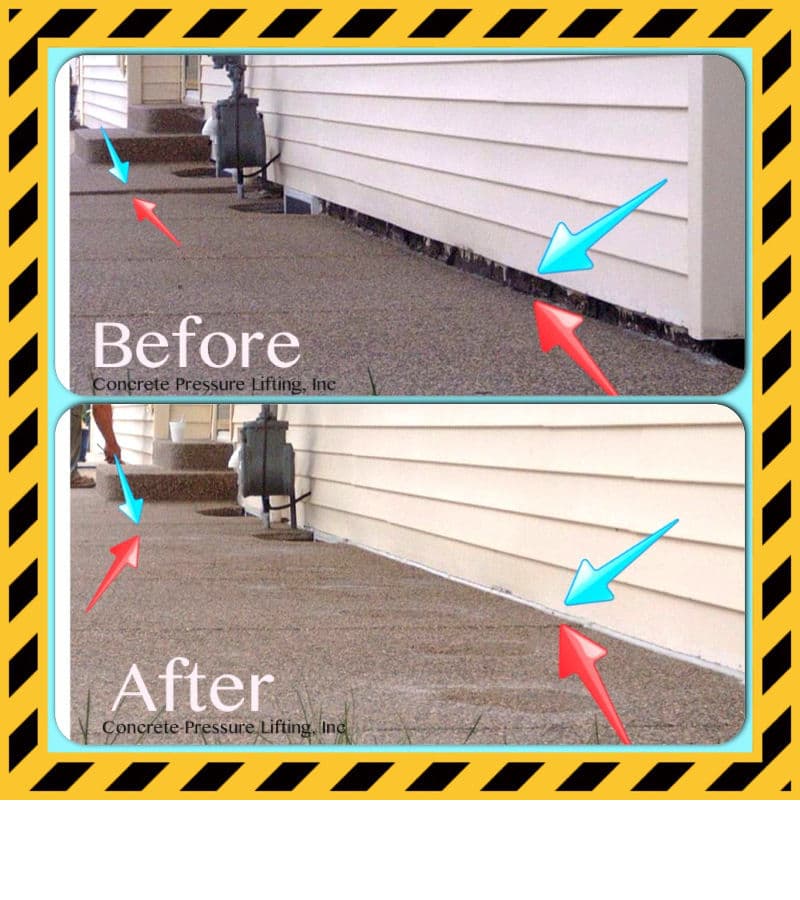
When Your Concrete Apron Starts Sinking: One Homeowner’s Story
We recently got a call from a homeowner — let’s call her Karen — who’d been referred to us by her sister. Karen was worried about two things: the concrete apron in front of her house had sunk “pretty good,” and her exposed aggregate patio out back had started cracking and settling after nearly three decades of holding up just fine.
Like a lot of people, Karen’s first thought was, “I guess I just need to replace it all.” But then she wondered if there might be a way to save some money and still fix the problem. That’s where we came in.
We hear versions of Karen’s story all the time. Concrete aprons and patios start to sink, crack, or tilt, and homeowners aren’t sure if they’re just dealing with an eyesore or a serious issue — or whether lifting/leveling is a realistic alternative to full replacement.
What Is a Concrete Apron, and Why Does It Sink?
The “apron” Karen mentioned is that band of concrete right in front of the garage or around the perimeter of a home. It’s meant to provide a smooth transition from the driveway to the garage and help direct water away from the foundation.
Over time, that apron can start to settle or sink. The most common causes we see are:
- Soil erosion – Water washes away or softens the soil underneath the slab.
- Poor compaction – The ground wasn’t compacted properly before the concrete was poured.
- Freeze–thaw cycles – In colder climates, water in the soil freezes, expands, then thaws, creating voids under the slab.
- Drainage issues – Downspouts, grading, or leaking gutters can dump water right along the apron.
In Karen’s case, the apron in front of her house had sunk noticeably and created a step down from the garage. That kind of drop-off is more than just annoying — it can signal that the soil beneath is moving or washing out.
When a Patio Starts Settling After Decades
Karen also mentioned an exposed aggregate patio that had looked fine for 27–28 years and only recently started cracking and settling. That long stretch of stability followed by sudden movement is a red flag that something in the soil or drainage has changed.
Common reasons a “good for years” patio suddenly misbehaves include:
- New drainage patterns from landscaping changes, added concrete, or neighboring construction
- Natural soil consolidation finally catching up under long, heavy loads
- Changes in groundwater, especially after very wet or very dry seasons
- Minor cracks that let water in, slowly undermining the base
When a slab that’s held steady for decades begins to move, it’s a sign to look not just at the concrete itself, but at what’s happening underneath and around it.
Why Sinking Concrete Is More Than Just Ugly
When we talk with homeowners like Karen, the first concern is usually appearance or inconvenience. But there are some real risks to ignoring sinking or cracked aprons and patios:
- Trip hazards: Uneven slabs, lips at the garage, or tilted patio sections can cause falls — especially for kids, older adults, or anyone carrying groceries or tools.
- Water intrusion: A sunken apron can slope water toward your garage or foundation instead of away, which can lead to moisture problems, cracking, or even basement leaks.
- Vehicle damage: That “bump” driving into the garage can strain tires, suspension, and the garage door if it’s catching on high or low spots.
- Structural stress: In some cases, sinking flatwork right next to the house can indicate or worsen movement in nearby foundation elements.
So while it might be tempting to live with it, the safer (and often cheaper) option is to address the problem while it’s still manageable.
Replacement vs. Lifting/Leveling: What’s the Difference?
When Karen asked us to come out, she’d already been considering tearing everything out and starting over. That is one option — but not the only one. Here’s how we walk homeowners through the two main approaches.
Option 1: Full Concrete Replacement
What it involves: Breaking up and hauling away the old concrete, re-prepping the base, and pouring a brand-new slab.
Pros:
- Fresh, clean surface with the chance to change layout, color, or finish
- Can address severely broken, thin, or poorly installed slabs
- Opportunity to correct base issues if done properly
Cons:
- More expensive than lifting in most cases
- Messier, louder, and more disruptive
- Longer downtime while new concrete cures
- If the underlying soil issues aren’t fixed, the new slab can settle again
Option 2: Concrete Lifting/Leveling
When Karen asked if she could “save some money” by looking at different options, this is what she was talking about.
What it involves: Rather than replacing the slab, we drill small holes in the concrete and inject material (such as polyurethane foam or a cementitious slurry) underneath. This fills voids, stabilizes the base, and gently raises the concrete back toward level.
Pros:
- Usually much more cost-effective than replacement
- Far less mess; no need to tear everything out
- Fast turnaround — often usable the same day or next day
- Preserves matching finishes like exposed aggregate that can be tough to replicate
Cons:
- Not ideal if the concrete is severely broken, crumbling, or extremely thin
- Won’t fix deep internal cracks — it stabilizes and realigns what’s there
- Very large height differences or severely heaved sections may still need replacement
How We Decide Which Option Makes Sense
When we come out to a home like Karen’s, we look at a few key factors before recommending replacement or lifting:
- Condition of the slab – Are the cracks hairline or wide and separated? Is the surface spalling or deteriorating?
- Amount and pattern of settlement – Is one corner down a bit, or is the entire slab dropping or tipping?
- Thickness and reinforcement – Thicker, reinforced slabs are usually better candidates for lifting.
- Drainage and grading – Where is water going now, and where should it go?
- How long the issues have been developing – Sudden changes, like Karen noticed over the last year, can point to active soil or water problems that need to be addressed.
Sometimes, the best answer is a combination: lifting the apron to remove the trip hazard and improve drainage, while replacing only the most damaged portion of a patio or walkway.
What You Can Do If Your Apron or Patio Is Sinking
If you’re seeing the same signs Karen did — a sinking garage apron, new cracks in an old patio, doors getting harder to open, or water pooling where it didn’t before — here are a few practical steps:
- Take photos and measurements of the worst spots, including any gaps at the garage or steps.
- Watch water on a rainy day to see which way it’s flowing and where it’s pooling.
- Check gutters and downspouts to make sure they’re not dumping water right next to your concrete.
- Get a professional assessment before you commit to replacement — you may have lifting/leveling options that can save money and preserve what you already have.
When Karen called, her goal was simple: fix the problem without spending more than she needed to. That’s our goal too — to help you understand why your concrete is sinking, whether it poses a real risk, and which repair option makes the most sense for your home and your budget.
If your apron or patio is starting to settle, don’t wait for it to become a bigger hazard. An early look can often mean an easier, less expensive fix.