Sinkholes Under Garages? Voids, Mudjacking & Fixes
Worried about a sinkhole under your garage? Learn why voids form beneath concrete floors, warning signs to watch for, and how mudjacking/core filling compares to foam or full replacement.
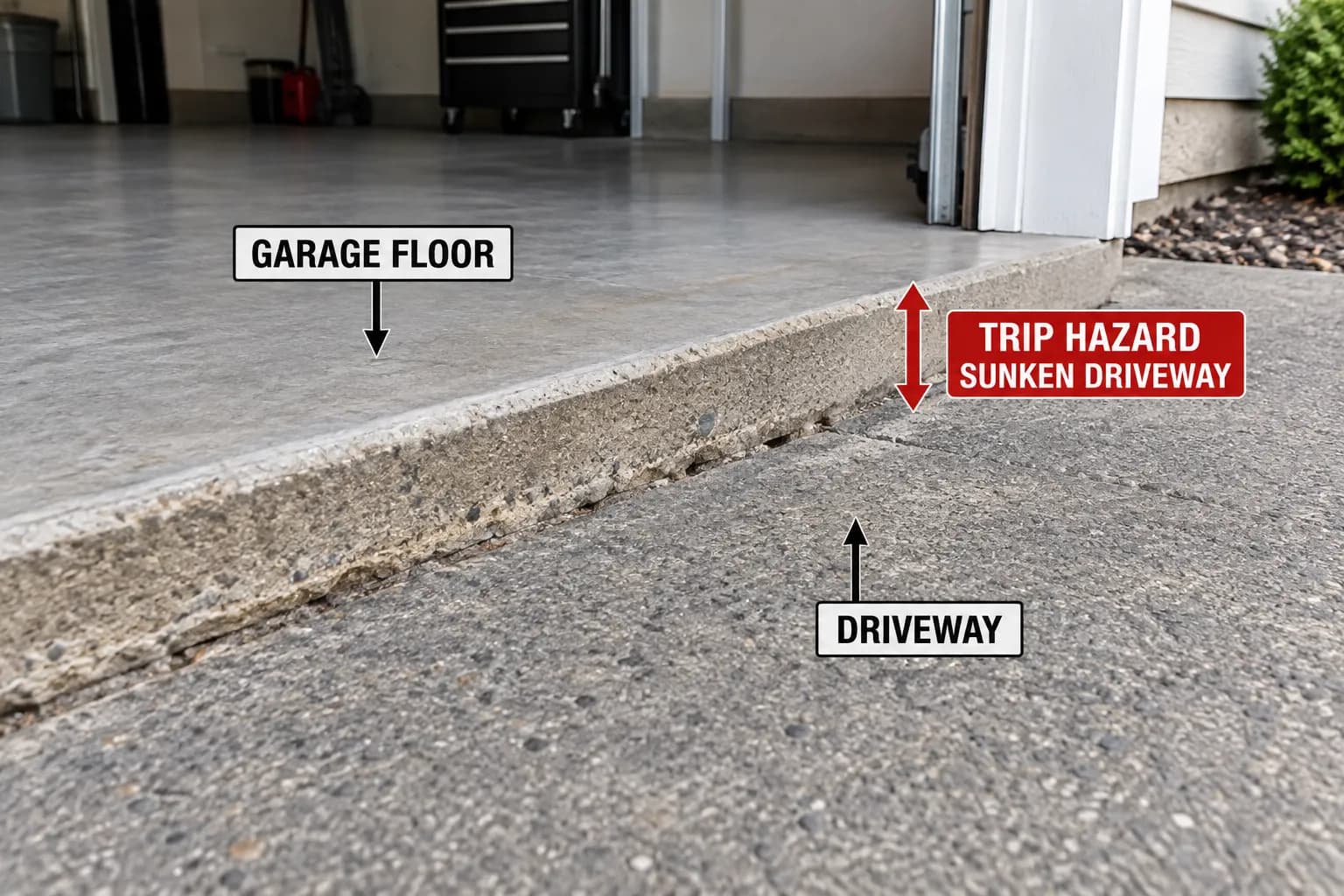
“My Garage Floor Has a Sinkhole…”
We recently got a call from a homeowner — let’s call him Bill — who had that exact sinking feeling about his garage.
Mark had bought his house about a year ago. Over the winter, he noticed the concrete apron in front of his garage suddenly heaved up three to four inches, while a one-foot square chunk of his garage floor cracked near a downspout. When he started digging to fix the drainage, he discovered something that would make any homeowner’s stomach drop: he could shine a light under the slab and see a huge cavity under the garage floor, and part of the corner footing was missing.
His question to us was simple: “Is this mudjacking? Core filling? Foam? Full replacement? What do I actually need?”
In this post, we’ll walk you through exactly what we explained to him: why these voids form under garage slabs, how to spot early warning signs, and the pros and cons of common repair options like mudjacking/void filling, foam injection, and full replacement.
Why Garage Aprons Heave and Voids Form Under Slabs
When we met Mark at 7:30 in the morning to look at his garage, we could see the story the concrete was already telling us. A heaved apron, a cracked interior slab, and a downspout dumping water right by the corner of the garage — that combination is a classic recipe for voids.
Here’s what typically happens in situations like his:
Poor downspout drainage – Water discharges right next to the garage, soaking the soil by the footing and under the slab.
Soil erosion – Over time, flowing water carries fine soils away, creating hidden cavities beneath the concrete.
Freeze–thaw movement – In winter, saturated soils expand as they freeze. That can push the apron and slab up (heaving). When it thaws and the soil settles or washes out, the concrete may drop, crack, or bridge over a void.
Questionable backfill or prior “patches” – Sometimes a previous owner knows there’s an issue and just covers it up. We see this when we dig, just like Mark did, and find loose fill or previous attempts to hide a cavity.
Eventually, the concrete is no longer supported evenly. It starts spanning over empty space. At that point, even normal vehicle loads or a seasonal freeze–thaw cycle can crack the slab and expose the problem.
How We Check for Hidden Voids Under a Garage Floor
When we inspect a garage, we don’t just rely on what we can see. We bring a piece of rebar or a similar metal rod and tap the surface of the slab. After doing this for decades, we’ve gotten very good at hearing the difference between solid support and a void.
Here’s how that works:
Solid support – The tap produces a higher, sharper sound. That usually means the concrete is bearing on compacted base or soil.
Shallow void – The sound goes slightly hollow, but not dramatically so. This can indicate a small or shallow cavity.
Deep or large void – The tone gets deeper and more echo-like. The deeper the tone, the deeper the void tends to be.
We tell homeowners the same thing we told Mark: we can’t see through concrete, so we never know the exact shape of the void. But with tapping, experience, and careful drilling patterns, we can estimate the size and calculate how much material it may take to stabilize it.
Warning Signs You May Have a Void Under Your Garage
You don’t have to wait for a full-on sinkhole to suspect a problem. If you notice any of these, it’s worth having a professional take a look:
Apron heaving or settling – The concrete in front of the garage moves up or down seasonally, sometimes several inches.
Cracks near corners or downspouts – Especially one-foot “chunks” or sharp, 90-degree cracks by exterior walls.
Hollow sound when tapped – If you tap the floor with a hammer handle or metal rod and hear a drum-like echo in certain spots.
Gaps at the foundation wall – A visible separation between the slab and the garage wall or stem wall.
Uneven or bouncy feel – The slab feels like it flexes slightly under vehicle weight or walking.
Any of these signs, combined with poor drainage or a history of water pooling near the garage, points us toward the possibility of erosion and voids.
Mudjacking/Core Filling: How Void Filling Works
In Mark’s case, once we confirmed there was a large cavity, we recommended core filling (void filling) with a classified base material — essentially a form of mudjacking tailored to stabilize the slab, not necessarily lift it.
Here’s the basic process we use:
Drill small holes in the slab in a strategic pattern.
Pump in a dense, granular slurry that behaves like the original compacted base material beneath the concrete.
Compact the void as the material flows in and builds up, supporting the slab from below.
Patch the holes once the slab is fully supported.
We strongly prefer a compactable, base-like material for void filling. When we’re stabilizing a garage, we want the slab to be sitting on something that mimics what was there originally — not just contouring to the shape of a washed-out cavity.
Foam Injection vs. Mudjacking/Core Filling
We often get asked about polyurethane foam injection because it’s become popular online. Here’s how we compare it to our base material from a homeowner’s perspective:
Foam Injection
Pros: Smaller injection holes, fast curing time, relatively light weight.
Cons: In our experience, we’ve seen failures with foam in void situations. Foam tends to conform to the existing soil and cavity instead of truly compacting and rebuilding a strong base. That can leave hidden weak spots, especially under large garages.
Mudjacking/Core Filling with Base Material
Pros: Provides true compaction, recreates a solid base layer, well suited for large voids, and has a long track record. We’ve used this approach for decades on hundreds of garage floors.
Cons: Injection holes are slightly larger than foam, cure time can be a bit longer, and the material is heavier (which is actually a benefit when the goal is compaction and support).
For Mark, and for most garages with significant erosion, we recommend void filling with a compactable base material rather than foam. Our goal isn’t just to “fill the hole” — it’s to rebuild the support system so the slab and footing don’t keep moving.
When Full Slab Replacement Makes Sense
There are times when we have to tell a homeowner that void filling alone is not the best use of their money. Full replacement may be worth considering if:
The slab is severely broken into many pieces.
Rebar or wire mesh is badly corroded or exposed across large areas.
The concrete is extremely thin, poorly poured, or past its practical lifespan.
Even then, we may still recommend void filling under the new slab if there’s extensive erosion around the footing or deep cavities below. The new concrete shouldn’t be poured over unstable soils.
Protecting Your Garage From Future Sinkholes
Once we stabilize a garage like Mark’s, we always talk about prevention. A few simple steps can dramatically reduce the risk of future problems:
Fix drainage – Extend downspouts at least 6–10 feet away from the garage, just like Mark did. Keep water away from the footing.
Maintain grading – Make sure soil or landscaping slopes away from the garage, not toward it.
Seal joints and cracks – Keep surface water from getting under the slab through open joints and gaps.
Watch for changes – If you start to notice new cracks, movement, or hollow-sounding areas, have them checked early.
If you’re seeing signs of a possible sinkhole under your garage — heaving aprons, cracks near downspouts, or suspicious hollow sounds — it doesn’t automatically mean disaster. With a careful inspection and the right void-filling approach, we can usually stabilize the slab and footing before things get worse.
And just like we told Mark, you don’t have to diagnose it alone. We’re always happy to come out, tap around, and let the concrete tell us what’s going on beneath your garage floor.