What to Do When Your Pool Deck Starts Sinking Toward the House
Pool deck concrete sinking toward your house? Learn the causes, risks, and repair options to restore proper drainage and protect your foundation.
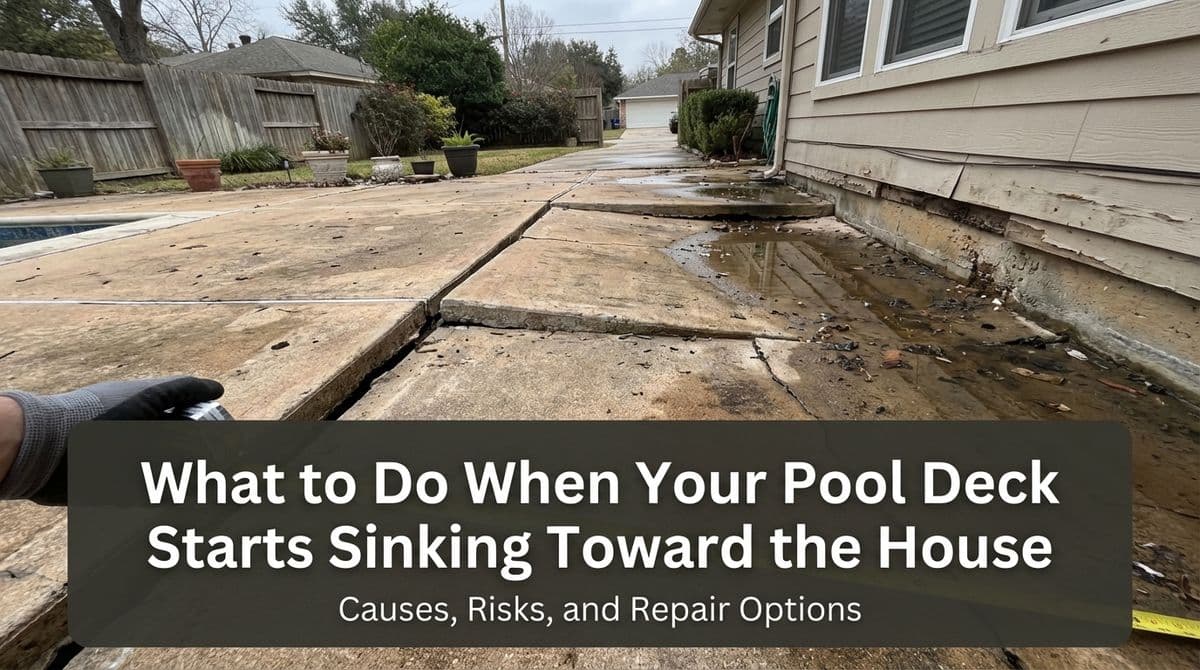
When Your Pool Deck Starts Sinking Toward the House
We recently got a call from a homeowner — let's call her Carol — who was noticing something that made her really nervous. The concrete around her backyard pool was starting to tilt toward the house instead of away from it.
She told us, “The slabs used to look nice and level, but now you can see the slope, and I’m worried the water’s going the wrong way.” Her son had used our concrete lifting services before and was happy with the results, so he told her to reach out before things got worse.
If you’re seeing the same thing around your pool, you’re not alone. Sinking pool deck concrete is common — but when it’s sinking toward the house, it’s a red flag you don’t want to ignore.
Why a Sinking Pool Deck Is a Bigger Deal Near the House
As we talked with Carol, her biggest concern wasn’t just tripping hazards — it was where the water was going. And she was right to be concerned.
Pool decks are supposed to be gently sloped away from your home, so splashed and rainwater drain into the yard, not toward your foundation. When the concrete settles unevenly, that slope can reverse, and you can end up with water flowing straight to your house.
Over time, that can lead to issues far beyond cosmetic concrete problems.
Common Risks When the Deck Slopes Toward the House
- Water against the foundation – Standing water next to your home can seep into foundation cracks and joints.
- Basement or crawlspace moisture – Poor drainage can contribute to damp walls, musty smells, and even mold growth.
- Heaving and more settling – In freeze-thaw climates, water at the foundation line can expand, contract, and cause more movement in both the concrete and the structure.
- Trip hazards and safety issues – Uneven concrete around a pool is especially risky when everyone’s barefoot and wet.
In Carol’s case, she started noticing small puddles forming between the pool and the house after it rained. That was a clear sign that the slab had shifted enough to change the drainage pattern.
What Causes a Pool Deck to Sink Toward the House?
During our initial conversation, Carol asked the same thing most homeowners do: “Why is this happening now, after all these years?” The concrete itself usually isn’t the problem — it’s what’s happening under it.
The Usual Culprits Beneath the Slab
- Soil washout – Water from rain, sprinklers, or the pool can work its way into joints and cracks, washing away the supporting soil.
- Poor compaction during construction – If the backfill around the pool or near the house wasn’t compacted well enough, it can slowly settle over time.
- Drainage problems – Downspouts or grading that dump water near the pool deck can soften and erode the base material.
- Clay soils and freeze-thaw – In areas with expansive or clay-heavy soils, seasonal moisture changes cause the ground to swell and shrink, moving the slab with it.
Often, the side of the deck closest to the house is right where backfill was placed when the home or the pool was built. That soil is more prone to settling, which is exactly why we see slabs tilt in that direction.
How to Know if It’s Time to Call a Professional
Some movement in exterior concrete is normal, but there are certain signs that tell us it’s time to take action. Here’s what we look for when we come out to inspect a pool deck like Carol’s:
- Visible slope toward the house – Water, leaves, or even a marble will “choose” the direction of the slope for you.
- Puddles against foundation walls – Any standing water where the concrete meets the house is a concern.
- Vertical drops between slabs – If one slab edge is higher or lower than the next, that’s a lift/level issue, not just surface wear.
- Gaps under overhangs or steps – Voids where you can see daylight under the slab are signs the support soil has disappeared.
If you’re not sure, here’s a quick homeowner test: after a good rain (or after you spray the deck with a hose), watch where the water naturally flows and where it lingers. If it hugs the house, it’s time for a professional set of eyes.
Repair Options for a Sinking Pool Deck
Once we scheduled a site visit with Carol, we walked through the repair options with her. Most homeowners are relieved to learn they don’t have to rip out the entire pool deck to fix the slope.
Concrete Lifting (Slabjacking / Polyjacking)
This is usually our first and best option for a settled pool deck. The basic idea is to lift the existing concrete back to a safer, more level position.
Here’s how a modern lifting process typically works:
- We drill small holes in the affected slabs.
- A specialized grout or polyurethane foam is injected beneath the slab.
- The material fills voids and gently raises the concrete.
- We monitor the pitch to restore proper drainage away from the house.
Once the slab is back where it belongs, the holes are patched and the surface is ready for use again. Most projects are completed in a day, and you can usually walk on the area the same or next day, depending on the material used.
When Replacement Might Be Necessary
There are situations where we’ll tell homeowners like Carol that lifting alone isn’t enough. For example:
- The concrete is severely cracked or broken into multiple pieces.
- The pool structure itself is moving or damaged.
- There are serious underlying drainage or plumbing issues that need correction first.
In those cases, we’ll talk through a plan that may involve replacing sections of the deck after addressing the root cause, so you don’t end up paying for the same repair twice.
How to Protect Your Pool Deck After It’s Fixed
Carol asked an important question near the end of our visit: “Once you fix it, how do I keep this from happening again?” While we can’t control the weather or soil types, there’s a lot you can do to extend the life of a repaired pool deck.
- Improve drainage – Make sure downspouts discharge well away from the pool area and foundation.
- Seal joints and cracks – Keeping water out from under the slab slows washout and soil movement.
- Watch your irrigation – Avoid over-watering areas right next to the deck.
- Inspect annually – Once a year, walk the deck, look for new gaps, cracks, or changes in slope, and address them early.
When in Doubt, Have It Looked At
If your pool deck concrete is sinking toward your house, don’t ignore it and hope it stops. The sooner we can look at it, the more likely we can correct the slope with a minimally invasive lift instead of a full replacement.
When we schedule a visit, we do what we did for Carol: listen to your concerns, inspect the pool deck and surrounding drainage, explain what’s happening beneath the surface, and lay out clear repair options so you can make an informed decision.
You don’t have to be an expert in soils or concrete — that’s our job. If your pool deck is starting to lean the wrong way, consider this your sign to have a professional take a look before water and time make the problem worse.