Fixing a Patio That Slopes Toward Your House
Selling or buying a home and your patio slopes toward the house? Learn why it matters, how we fix it with concrete lifting, and what it typically costs.
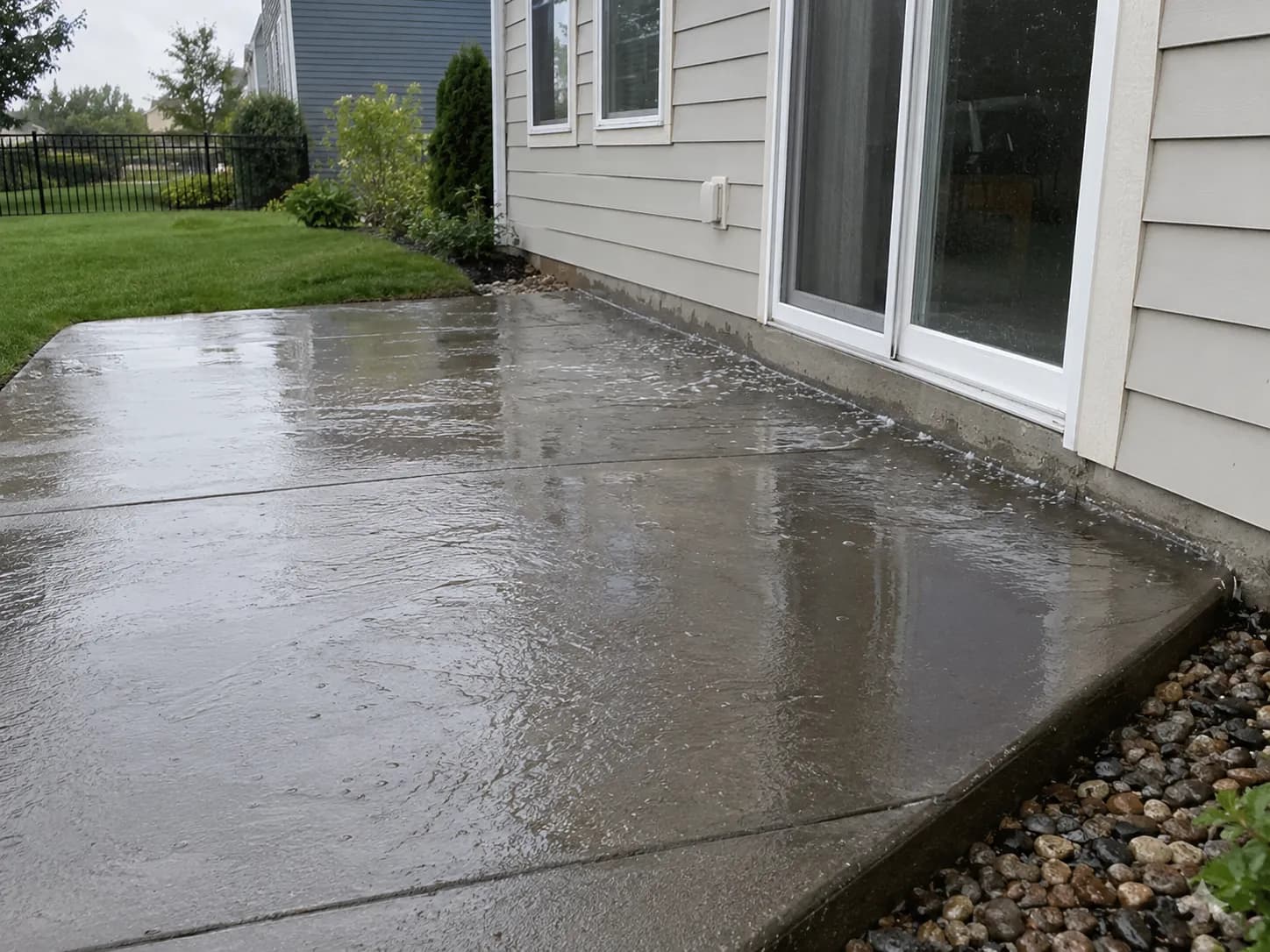
When Your Patio Slopes Toward the House During an Inspection
We recently got a call from a homeowner — let’s call him Mark — who was in the middle of selling his townhome. During the inspection, the buyers flagged his small backyard patio slab because it was sloping toward the house. The buyers’ inspector wanted a big credit at closing, and Mark was pretty sure the number they were asking for was way higher than the real repair cost.
On the call, Mark told us his free-floating concrete slab was about 8x8 or 10x10, tucked behind a row of six townhomes. He asked us the same questions we hear all the time:
- “How big of a deal is a patio that slopes toward the house?”
- “Can you give me a rough estimate over the phone?”
- “Can you get it done before my closing date?”
We walked him through what we usually see with patios like this, why it matters for drainage and inspections, and what it typically costs for us to fix it. Let’s walk through the same things we explained to him.
Why a Patio Sloping Toward the House Is a Real Issue
When we come out to look at a patio, one of the first things we check is where water goes when it rains. If your slab is tilted toward the house, here’s what we worry about:
- Water against the foundation: We see patios channeling water right up to the foundation or siding. Over time, that can mean seepage into the basement or lower level.
- Ice and slip hazards: In our climate, water that pools against the house can freeze in winter. We’ve seen plenty of icy, slick spots right outside patio doors.
- Inspection red flags: Home inspectors almost always write this up as a grading/drainage concern. Just like with Mark, that can turn into a negotiation point — often with buyers asking for more than the real repair cost.
From our perspective as concrete lifting specialists, a slab that slopes toward the house is usually fixable without full replacement. That’s why we encourage sellers and buyers to have us look at it before agreeing to big credits at closing.
How We Approach Fixing a Back Patio Slab
On Mark’s call, we told him what we tell most homeowners: we’d rather come out, take a look, and give a firm price than guess. But we also shared what we typically do on a slab like his.
Here’s how we usually repair a patio that’s sloping toward the house:
- 1. Site visit and measurements: We come out, measure the slab (8x8, 10x10, etc.), check access (gates, townhome layout, landscaping), and see how far it has settled and in which direction.
- 2. Check drainage goals: We look at where we want water to go — usually away from the house, slightly toward the yard. We’ll talk through that slope with you on site so we’re on the same page.
- 3. Pressure lifting / slabjacking: We typically drill small holes in the slab and inject material beneath it to lift and re-level the concrete. Our goal is to pitch the slab away from the house without creating a trip lip at the threshold.
- 4. Seal and clean up: Once we’re done, we patch our drill holes and clean up the work area. Most patios are usable again the same day, depending on the product we use.
This is the same process we planned for Mark’s patio once we got his inspection deadline and access details. Because we do this every day, we can usually work within tight real estate timelines — as long as we know the closing date up front.
Typical Costs for Lifting a Small Patio Slab
Of course, what Mark really wanted to know was, “What’s this going to cost us?” Over the phone, we shared the same ballpark we give most homeowners with a similar-sized patio.
For a free-floating backyard patio around 8x8 to 10x10, we typically see costs around $1,500 for pressure lifting, assuming normal access and no unusual complications. When we come out, we confirm that with a written quote so you know exactly what you’re looking at.
We also explained to Mark why buyers sometimes ask for much more:
- They may be assuming full demolition and replacement, which is a lot more expensive than lifting.
- They may not realize that we can often correct the slope in a single visit.
- They’re building in a cushion “just in case,” especially if they don’t know a local contractor.
That’s why, when we’re involved in a real estate transaction, we encourage our customers to share our written quote with the other side. It often helps bring those requested credits back down to reality.
Factors That Can Change the Price
Even though $1,500 is a common range we see, we always stress that every job is a little different. When we walk your property, we’re looking at:
- Access: Just like we asked Mark about gates and how many units were in his building, we need to know how easily we can get equipment to your slab.
- How far it’s settled: A small adjustment costs less than a slab that has dropped several inches.
- Cracking and condition: If the slab is badly broken, we’ll be honest if lifting isn’t your best option.
- Drainage situation: Sometimes we recommend pairing lifting with caulking or minor grading so water truly moves away from your home.
Our goal is always the same: give you a clear, written price so you can compare that to whatever the buyers or sellers are asking for.
What We Recommend If You’re in Inspection Period
If you’re in the same boat as Mark — under contract and staring down an inspection report — here’s what we usually suggest:
- Call us early: Tell us your inspection and closing dates so we can schedule your estimate and potential work in time.
- Get a firm quote: We’ll come out quickly, take measurements, and send you a written estimate instead of leaving you with a guess.
- Share our quote: Use our numbers when you negotiate. We see a lot of sellers save money this way.
- Fix it before closing when possible: We usually recommend doing the repair so both sides feel confident the drainage issue is resolved.
Whether you’re selling, buying, or just finally tackling that patio that always drains the wrong way, we’re here to look at your slab, walk you through options, and give you straight answers on cost — just like we did for Mark.