Sunken Driveway Slabs & Voids: How Mudjacking Fixes It
That sinking slab in front of your garage isn’t just annoying—it usually means a void underneath. Learn what causes it, DIY stopgaps, and how mudjacking fixes it for good.
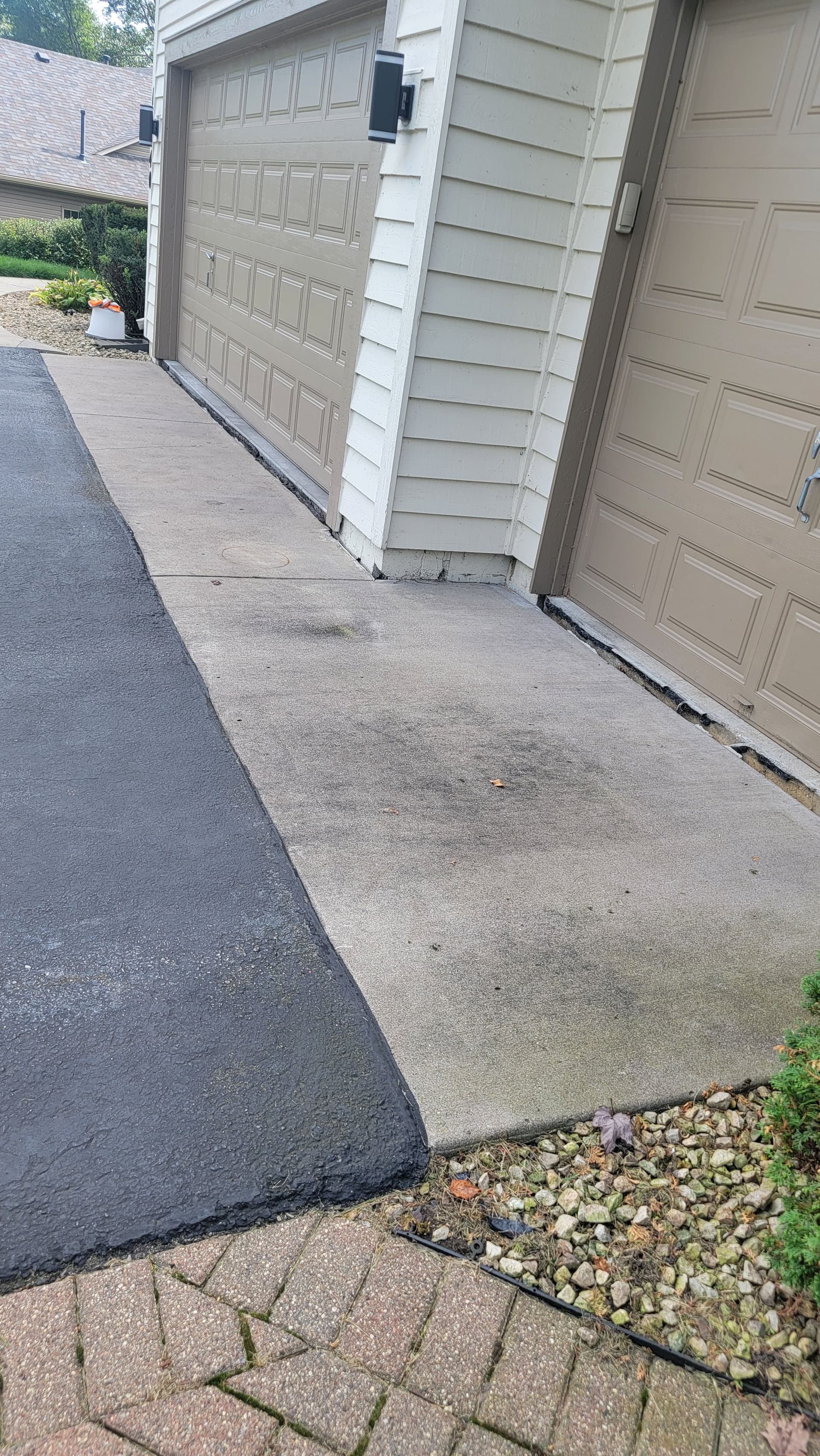
Why That First Row of Concrete by the Garage Always Seems to Sink
We recently got a call from a homeowner — we’ll call him Jake — who told us, “The first row of concrete slabs in front of our garage has sunk, and I know for a fact we’ve got a huge void under one of them.” He’d even stuffed a foam backer rod in the gap and caulked it a few years ago to keep water and debris out. By the time he reached us, he was ready for a permanent fix.
We hear a version of Jake’s story all the time. That first slab (or two) right in front of the garage door is one of the most common places we see sinking and voids when we’re out on inspections. From our experience, it usually comes down to a mix of soil, water, and weight.
What Causes Voids and Sunken Slabs by the Garage?
When we walk up to a driveway, we’re already thinking about what’s going on underneath. In front of the garage, there are a few usual suspects:
Soil settlement near the foundation. Builders backfill around the garage foundation, and that soil can settle over time. If the slab was poured over poorly compacted fill, we often find a hollow space underneath years later.
Water washing out base material. Rain, snowmelt, and downspouts can carry away the sand or gravel that’s supposed to support your driveway. We sometimes see clear tunnels where water has been flowing under the slab for years.
Freeze–thaw cycles. Around here, we deal with constant freezing and thawing. Water in the soil under the slab expands, contracts, and slowly shifts the support out from under that first row of concrete.
Vehicle load right at the door. Your heaviest loads — cars, trucks, SUVs — sit right in front of the garage. Over time, that constant weight on compromised soil makes the first slab settle faster than the rest.
When those factors stack up, you end up with a void under the slab. That’s exactly what Jake had noticed: a gap big enough that he could poke around under the concrete edge.
Warning Signs We Look For During an Inspection
When we come out to look at a driveway, we’re not just eyeballing the surface. Here’s what we typically look for around the garage area:
Visible gaps under the slab edge. If we can slide a tape measure or even our fingers under the concrete, there’s likely a sizable void.
Drop or “lip” at the garage door. You might feel a bump driving in, or see that the slab has sunk below the garage floor.
Cracks radiating from the front of the garage. Cracks that widen toward the house often tell us the slab is dropping away from the garage.
Water pooling near the door. If water doesn’t drain away and instead sits right by the garage, the slope has probably changed because the slab settled.
On our inspections, we’ll usually walk the slab, tap on the surface, and sometimes drill a small test hole to see what’s really going on under there.
Foam Rod and Caulking vs. a Permanent Lifting Solution
Jake had already done what a lot of handy homeowners try first: he pushed foam backer rod into the gap and sealed it with caulk. We actually like that as a temporary measure. It helps:
Keep surface water from running straight into the void
Block out debris and ice that can make things worse
Improve appearance in the short term
But from our perspective, caulking doesn’t address the real problem: there’s still an empty space under the slab. Over time, the concrete keeps dropping until it cracks or becomes a tripping hazard. When we see a big void at an inspection, we usually recommend lifting and stabilizing rather than just re-caulking year after year.
How Mudjacking (Concrete Pressure Lifting) Works Step-by-Step
When we explain mudjacking to homeowners, we describe it as “injecting support back under your concrete.” Here’s how we typically handle a driveway like Jake’s:
Drill small holes in the slab. We drill a pattern of small, strategically placed holes through the concrete. We choose locations to get material under the most hollow areas while staying as unobtrusive as possible.
Pump a grout mix. Through those holes, we pump a specialized slurry under the slab under controlled pressure. You’ll sometimes see the slab begin to gently rise as we work.
Lift and level. We watch the slab closely, using levels and our experience to bring it back to its original height at the garage, or to match adjoining slabs.
Fill the holes and clean up. Once the slab is supported and level, we patch the drill holes with a cement-based material and clean the area. Over time, the patched spots blend in visually.
By the time we’re done, that first row of concrete in front of the garage is supported again, the void is filled, and the trip hazard or bump at the door is usually gone.
What to Expect During Our Onsite Quote and Inspection
When someone like Jake reaches out, we usually start just the way you heard on his call: we gather some basic information, then schedule a time to come out. Here’s what we typically do on site:
Walk the entire driveway and garage area. We don’t just look at the sunken slab — we check neighboring slabs and how everything ties into the garage floor and walkways.
Look for drainage issues. We pay attention to gutters, downspouts, and where water tends to run or pool. If water is causing voids, we’ll point that out and suggest simple fixes.
Check for structural concerns. If the garage foundation or interior slab is severely compromised, we’ll tell you if mudjacking isn’t the right answer.
Explain options and pricing. We walk you through what we’d recommend, how the process will work at your house, and provide a written quote.
Some homeowners like to be there and ask questions; others prefer us to stop by, assess, and email the quote. We’re comfortable working either way.
How Long Does Mudjacking Last Compared to Replacement?
One of the most common questions we get on site is, “How long will this last?” In our experience, a properly lifted and supported slab can perform for many years — often just as long as a new driveway, as long as the underlying issues (like drainage) are addressed.
Compared to full replacement, mudjacking typically:
Costs significantly less. We’re reusing your existing concrete instead of tearing it out and hauling it away.
Takes less time and disruption. Many projects are completed in a few hours, and you can often drive on the slab again within a short period, depending on conditions.
Preserves matching surfaces. You don’t end up with one brand-new, bright slab next to older weathered ones.
Full replacement still has its place — for example, if the slab is shattered, crumbling, or too thin. When we inspect a driveway, we’ll be honest about which route makes more sense long term.
When It’s Time to Call a Professional
We’re all for simple DIY solutions when they make sense. But based on what we see in the field, here’s when we recommend calling us (or another concrete lifting pro):
The slab has dropped enough to create a trip hazard or a big bump at the garage door.
You can see or feel a large hollow space underneath when you tap the surface.
Water is running straight toward your garage or pooling at the door.
Cracks are getting worse each season even after you caulk them.
If you’re just dealing with a hairline crack and a tiny gap, foam rod and caulking can buy you some time. But if you know, like Jake did, that there’s a “huge void” under there, lifting and filling that space is the real fix.
Simple Maintenance Tips After We Lift Your Driveway
Once we’ve lifted and stabilized your slabs, we want that repair to last. We usually suggest homeowners:
Seal joints and cracks. After lifting, keep the joints and cracks sealed with quality caulk to limit water getting under the slab again.
Watch your drainage. Make sure downspouts discharge away from the driveway and that soil along the edges slopes away from the concrete.
Avoid heavy point loads. Don’t store extremely heavy items (like large dumpsters) on the same small area for long periods.
These small steps help protect the investment you’ve made in lifting and can extend the life of your driveway dramatically.
Ready to Fix Your Sunken Driveway?
If that first row of concrete in front of your garage has sunk or you suspect a big void under a slab, you’re not alone — we see it all the time on our inspections. Our mudjacking (concrete pressure lifting) process is designed to fill those empty spaces, re-level your slabs, and help protect your garage from water and further damage.
Whether you’ve already tried foam rod and caulking like Jake or you’re just starting to notice a problem, we’re happy to come out, take a look, and give you a straightforward, no-pressure quote so you can decide what’s right for your home.